
Barra Nova Lagoon: history, formation and why it's perfect for kitesurfing
One of Brazil's flattest lagoons with consistent winds and shallow water
What is Barra Nova Lagoon?
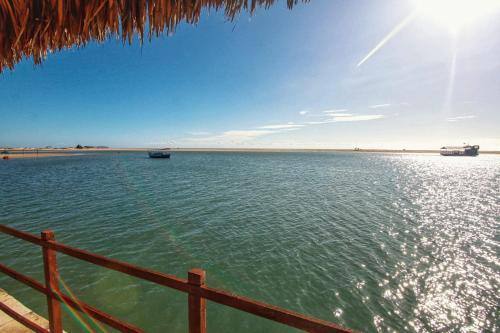
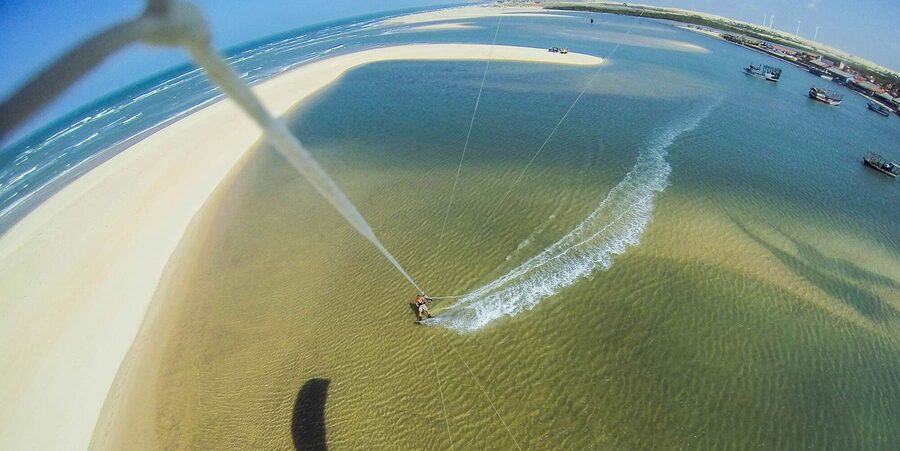
Barra Nova Lagoon is a coastal body of water located in the municipality of Cascavel, on the eastern coast of Ceará, approximately 76km from Fortaleza. About 800 meters long by 200 wide, with an average depth of 1 to 1.5 meters, it sits next to the mouth of the Choró River, sheltered from the open sea by a sandbar — a rare configuration that creates unique flat water and cross-shore wind conditions.
How does the lagoon form?
The lagoon sits at the mouth of the Choró River, where the river meets the Atlantic. A sandbar separates this calm water from the open sea, and dunes shaped by the trade winds complete the shelter. The result is a shallow lagoon protected from ocean swells — ideal conditions for kitesurfing, especially for beginners and freestyle training. The shallow depth (1m to 1.5m through most of the lagoon) is especially important: it allows learners to walk back to shore without having to swim, reducing risk and accelerating the learning curve.
Why is Barra Nova special for kitesurfing?
Three factors make Barra Nova unique in the global kitesurfing context: 1. FLAT WATER — Unlike ocean spots, the lagoon has no swell. This means beginners learn faster, intermediate riders develop freestyle techniques without ocean chaos, and advanced riders can execute moves with consistency. 2. CONSISTENT CROSS-SHORE WIND — South Atlantic trade winds reach the lagoon at a perfect cross-shore to side-offshore angle, especially between July and December. The historical average is 18-25 knots during peak season — ideal wind for both beginners and advanced riders. 3. DIRECT ACCESS — The pousada is meters from the lagoon. No transport, no long walk with equipment. Wake up, have breakfast, and in 5 minutes you're on the water.
Size and depth: the real numbers
The lagoon measures about 800 meters in length by 200 in width. The level changes with the tide and with the early-year rains, and at low tide some areas get even shallower — which is why the Escape team briefs you on the lagoon before your first session. Average depth ranges from 0.8m to 1.8m. At the edge, especially on the Escape Kiteboarding side, the depth is sufficient to launch and land kites without issue, but shallow enough to feel safe. This size and depth combination creates what kiters call 'perfect flat' — flat water, with no swell, from the start of the session to the end.
History and discovery of the spot
Barra Nova was virtually unknown outside Ceará until the mid-2000s. Kiters exploring the Brazilian coast in search of alternatives to Jericoacoara and Cumbuco discovered the lagoon and began spreading the word on international forums. The first kitesurfing infrastructure in the region emerged around 2008-2010. Today, the spot attracts kiters from Brazil, Germany, France, Netherlands and Eastern European countries — especially because the season (July-December) coincides with winter in the northern hemisphere.
When to go: the best months
Peak season runs from July to December, with the best winds between August and October. During this period, wind blows virtually every day, averaging 18-22 knots with gusts up to 28 knots. January through March is the off-season — rains, weaker and irregular winds. Not recommended for kiting, but ideal for those who want to experience the place with fewer crowds and lower prices. April, May and June are transitional: wind starts appearing, still irregular, but with wind windows already worthwhile for more experienced kiters.
The lagoon beyond kiting
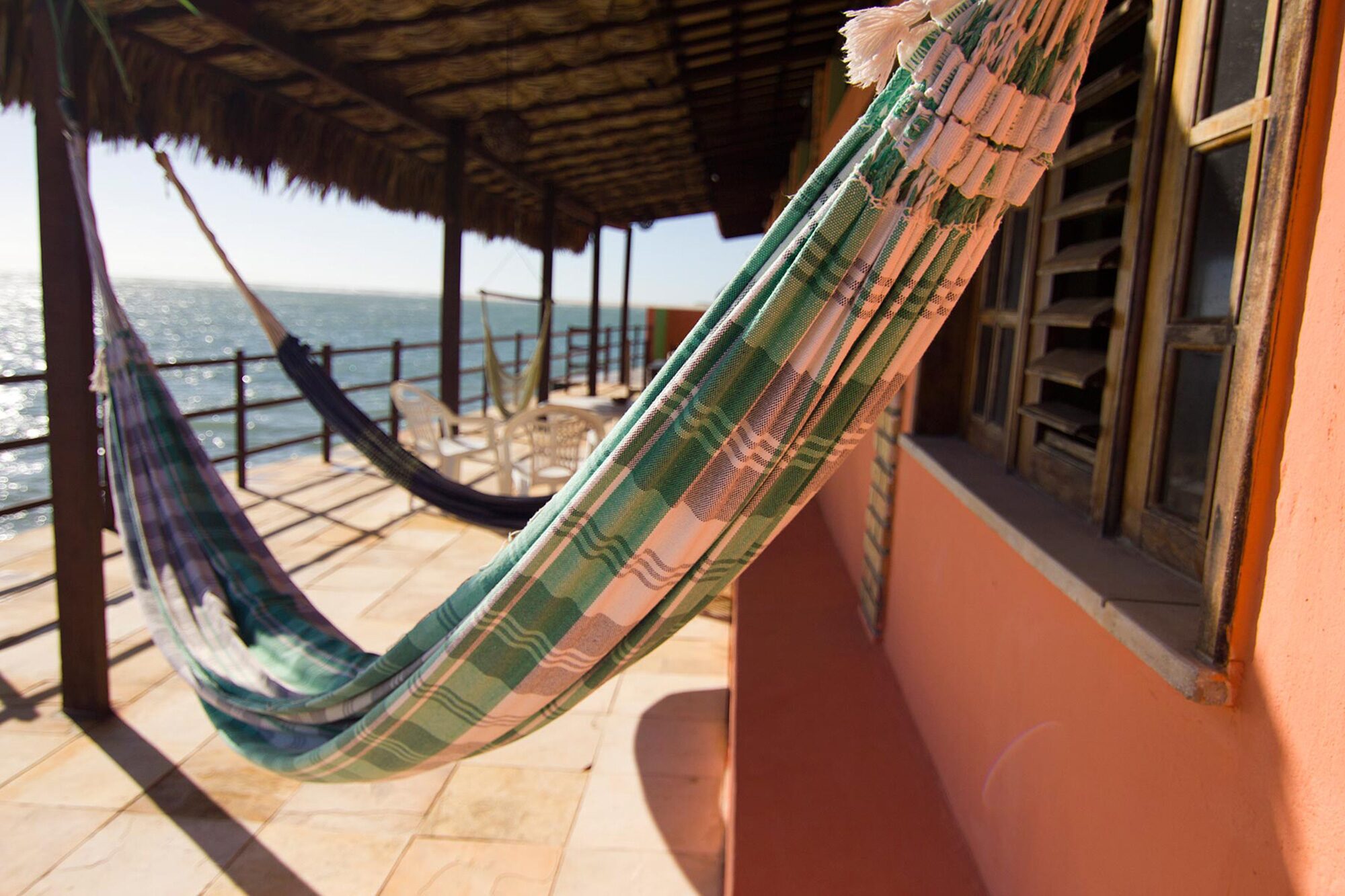
Barra Nova lagoon isn't only for kiters. On weekends, local families line the shores, floating bars appear on the water, and the sunset over the lagoon is one of the most photographed spectacles on Ceará's eastern coast. Boat tours on the lagoon are another attraction — Escape Kiteboarding offers packages including trips along the Choró River and out to the ocean. The area is also the starting point for dune buggy tours, one of the region's must-do activities.