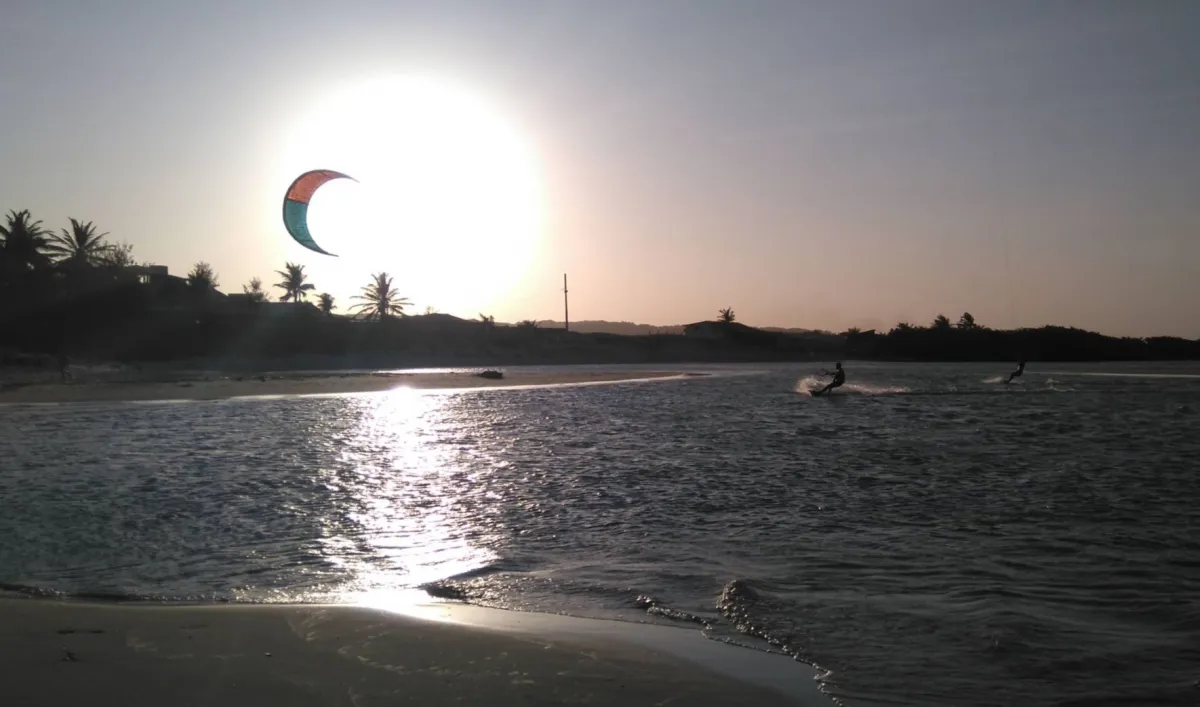
Wingfoil in Ceará: a guide for beginners
What it is, how it compares with kitesurfing and what to consider before learning
What is wingfoil?
Wingfoil — or wing foiling — combines three elements: a board with a foil (an underwater wing, attached by a mast, that lifts the board above the water once there is speed) and a handheld inflatable wing, which the rider holds and which pulls them along with the wind. Unlike kitesurfing, there are no lines and no bar: the wing is held directly. The result is the feeling of gliding above the surface of the water. It is a recent sport that has grown in popularity in recent years and is practised in many countries.
Wingfoil or kitesurfing: which to learn first?
Choose KITESURFING if you want more options in conditions, a bigger community or tricks with big jumps. Choose WINGFOIL if you already do a board sport (surf, snowboard), want the feeling of flying over the water or prefer compact, easy-to-transport equipment. The wing usually works well in a little lighter wind than is ideal for a kite.
The question of depth
The foil sits under the board, attached to a mast. Even with the shorter masts used by beginners, the setup needs enough depth: in very shallow water the foil can touch the bottom. Barra Nova lagoon has an average depth of 1 to 1.5 metres, which is great for learning kitesurfing, and the depth changes with the tide. For wingfoil, it is therefore worth asking the team where and in what conditions riding is feasible at the time of your trip.
Wind and season in Ceará
The Ceará coast has steady wind from July to December, with averages of 15 to 25 knots at Barra Nova. Because the wing works well in slightly lighter wind, the months with more moderate averages (July and December, at 15 to 18 knots) may suit wing riders. Our guide to the best time to kite in Ceará covers the wind month by month.
Equipment: what to consider
As a general reference for beginners (it varies with weight and level): WING: smaller models, around 5 to 6 m², are usually used in 15 to 20 knots of wind. BOARD: bigger boards, with more than 100 litres of volume, are more stable for learning. FOIL: shorter masts and larger-area wings tend to be more forgiving. SAFETY: a helmet, an impact vest and ankle protection. Before buying, the best approach is to try the equipment with an instructor.
How long does it take to learn?
Times vary a lot from person to person. In general, people who already kitesurf or windsurf usually get their first flights in just a few sessions. Those with no wind-sport experience need more time: first wing control and balance, then the first attempts to lift the foil and, with practice, sustained flight.
Wingfoil at Escape
Want to know about wingfoil lessons or experiences in Barra Nova? Availability varies with the season and the schedule: talk to the Escape team on WhatsApp before booking your trip. To understand what the spot offers, also read the guide to kitesurfing in Barra Nova.